Humanoids 16 October 2026
Unitree G1, R1 and H2 Compared: Which Humanoid Suits Whom?
Three sizes, three uses: what sets Unitree's humanoids apart and what matters when choosing.
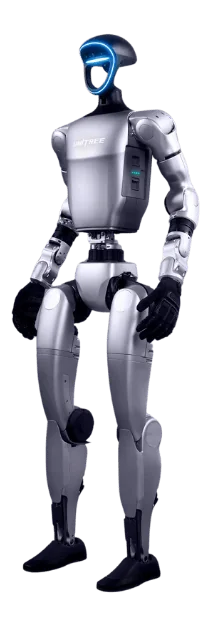
Unitree offers humanoids in several sizes. All of them are bipedal, but they differ in height, agility and how open they are to custom development.
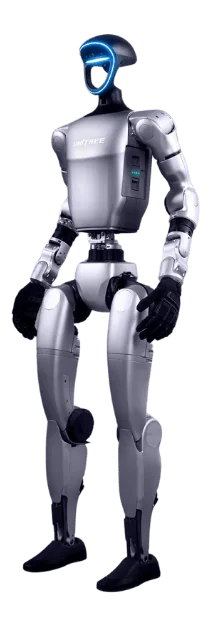
Unitree G1: compact for demonstration and teaching
The G1 Basic has 23 degrees of freedom, weighs around 35 kg and runs for about 2 hours. It is equipped with a depth camera and 3D LiDAR, but is not intended for custom development. The EDU version of the G1 offers 23 to 43 degrees of freedom, optional dexterous hands and access for custom development.
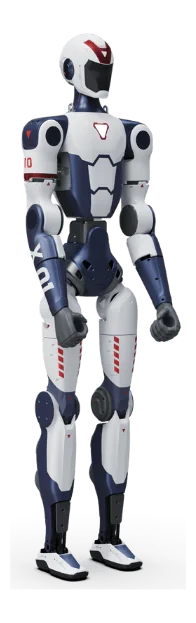
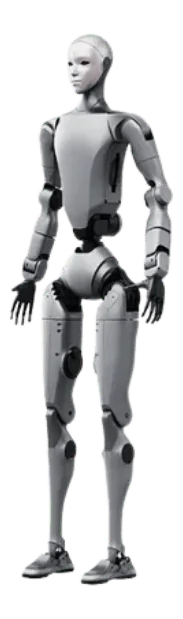
Unitree R1 EDU: small and light
At around 1.23 m tall and about 29 kg, the R1 EDU is the lightest of the family. Depending on the configuration it has 26 to 40 degrees of freedom, modular hands and compute modules, and is aimed at research, teaching and AI development.
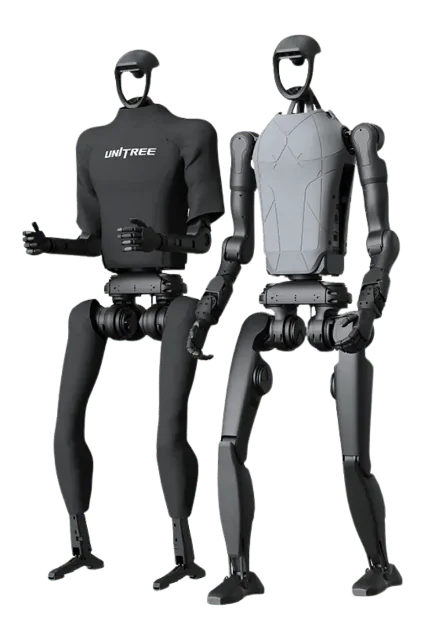
Unitree H1 and H2: full-size humanoids
The H2 (EDU) stands about 1.82 m tall at 70 kg, has 31 degrees of freedom, carries around 7 kg per arm and runs for about 3 hours. The H series also includes the H1, focused on dynamics (up to 3.3 m/s), and the H1-2 with 27 degrees of freedom for agility and manipulation.
Which one fits?
For demonstrations and training, the G1 Basic is often enough. If you want to develop your own software, choose an EDU version. For tasks needing more reach and arm strength, the full-size models come into question. We advise you on which variant fits your project.